
- News
- City News
- bengaluru News
- 16,000 truckloads of silt to be removed from Hesaraghatta dam
Trending
This story is from June 19, 2018
16,000 truckloads of silt to be removed from Hesaraghatta dam
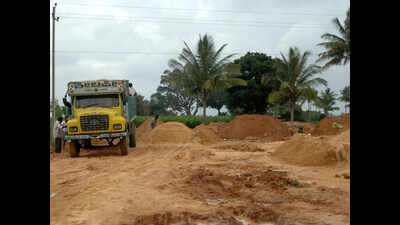
(Representative image)
The government is all set to give a green signal to the project, which also entails the revamp of Thippagondanahalli (TG Halli) dam. The two reservoirs are vital for augmenting drinking water supply to Bengaluru city by getting water from the Yettinahole diversion project.
TOI has accessed a copy of the DPR, which has been prepared by Tata Consulting Engineers Limited and submitted to the Bangalore Water Supply and Sewerage Board (BWSSB).

The project envisages enhancement of storage volume at Hesaraghatta dam, which can be achieved by removal of excess silt via open dredging. Around 102 million cubic feet, which translates into 16,000 truckloads, will be removed through dredging. In fact, water will flow from Hesaraghatta Lake to TG Halli reservoir before being pumped to Bengaluru.
The DPR says: “Hesaraghatta reservoir is completely dried up with no water, the storage area is filled with silt and trees are growing over the reservoir area. The last time the reservoir was filled with water was in 1994.” Ditto with TG Halli, where the water is considered too polluted for consumption.
KC Subhash Chandra, hydro-geologist and former member of the expert panel in the Karnataka Groundwater Authority, said sediment settlement was a very big problem in catchment areas.“Silt from the catchment area consists of laterite (soil), which comprises a large component of clay. This is what gives the silt an impervious texture, preventing the percolation of water below the ground and preventing groundwater recharge. Desilting must be undertaken periodically,” he said.
Reviving the two reservoirs will ensure that Bengaluru will get an additional supply of 2.5 tmcft of water per year. The DPR also suggests fencing the reservoir area, strengthening earthen bunds, replacing old pipelines, decommissioning the valve tower at Hesaraghatta, revamping the 124-year-old Soladevanahalli pump house complex, repairing sluice gates and upgrading pumping stations.
Former BWSSB chief engineer PN Ravindra said: “The Hesaraghatta bund has to be repaired as it is over 200 years old. Additionally, the quality of water at TG Halli is very poor and loaded with benthic sediment, which is deposition of organic material over time. This will also contaminate any fresh water entering the reservoir, which is why it must be cleaned through dredging. By 2020, atleast 100 mld can be pumped to the city using the existing pumping stations,” he said, adding that more alum and chemicals would be added to enhance the purification.
Box: Tech to cleanse water
To ensure the water is suitable for drinking , the DPR has suggested deployment of special filtration technologies. Ozone with granular activated carbon (dual media filters) will be used to treat raw water. “A 30mld-capacity plant will come up at Hesaraghatta and one with 170 mld capacity will treat water at TG Halli,” said Ravindra.
‘Existing infra outdated’
According to Tushar Girinath, BWSSB chairman, the unexpected growth of the city has rendered the existing infrastructure at the two reservoirs obsolete. “We need water treatment plants, local distribution networks, new tanks and pumping machinery. The scale of the rejuvenation effort is akin to taking up a new pumping project altogether,” he said.
End of Article
FOLLOW US ON SOCIAL MEDIA





Hot Picks
TOP TRENDING
Trending Stories
In City
Entire Website
- Malaika Arora's father Anil Arora dies by suicide in Mumbai
- 7 Key Reasons Why UPSC is the Toughest Exam in India
- 9/11 Remembrance Day: Key moments from the deadliest attack on US
- Howard University: 10 landmark firsts of the institution that shaped Kamala Harris
- Earthquake of magnitude 5.8 strikes Pakistan, tremors felt in Delhi, neighbouring areas
- Who were Barack Obama's challengers in 2008 and 2012 US presidential elections?
- 'A in INDIA alliance': Rahul Gandhi's slip-up during address to Indian-Americans goes viral
- Trump vs Harris: Betting markets reveal who’s expected to win the US presidential debate
- IGNOU December 2024 Term-End Exam: Registration Details, Important Dates, and Fee Structure
- Top 10 TED Talks to Boost Confidence and Success for Female Students
- 2 Army officers thrashed, their female friend gang-raped in Madhya Pradesh
- Centre seeks review of SC's mineral royalty judgment
- Kamala may have won debate. But election is still too close to call
- IIT-Guwahati academic affairs dean quits amid stir over student suicide'
- BJP netas would’ve been in jail had we got 20 more seats: Kharge
- ODI World Cup 2023 boosts India's economy by Rs 11,637 crore: ICC
- Why SIP investing for 20 years may not have a multiplier effect
- Apple iPhone 16 vs iPhone 15: Which iPhone to buy and why
- PM Modi sets target of $500 billion for electronics production in next 6 years
- Why Biden wore a 'Trump 2024 hat' at the 9/11 memorial event

Popular Categories
Hot on the Web
Top Trends
Trending Topics
Deepika PadukoneMalaika Arora Father DeathArbaaz KhanJayram RaviAishwarya Rai BachchanSlat WaterWeight GainGOAT CollectionVikas Sethi DeathMalayalam ProducersIndia's Best Dancer 4Simi GarewalDilli BabuIndian National ParksLaung BenefitsVikas SethiiPhone 16Dubai Princess Sheikha MahraMG Windsor EvWordle Answer
Living and entertainment
Latest News
Kapil Sharma gives fans a peek into his Ganesh Chaturthi festivities with wife GinniNot MS Dhoni and Rohit Sharma, Gautam Gambhir calls this Indian player 'Shahenshah'. WatchPolice registered 10 cases against Ganapati mandals for using laser beam lightsMIT researchers develop eco-friendly water filter to eliminate “forever chemicals” and heavy metalsThe Zodiac Signs Most Naturally Inclined to HealingWhy Banyan trees survive for centuries and spread indefinitely?Telangana government pushes for increased flood relief from CentrePolicy of 'Padak Lao, Pad Pao' will be implemented again for the sportspersons, says Deepender HoodaBest 20000mAh Power Banks To Power Your Devices Wherever You GoWalking dog in Goa? Mouth guard, leash soon to be mustDonald Trump and Kamala Harris shake hands as they meet for first time on debate stage: Watch the 'awkward' momentBRS pushes for disqualification of turncoat MLAs after High Court rulingKamala may have won debate. But election is still too close to callCommunal violence erupts in Karnataka during Ganpati Visarjan, section 144 imposedVarun Dhawan shares unfiltered reaction to Janhvi Kapoor's 'Daavudi' song from 'Devara: Part 1': 'So freaking good...''On basis of fairness and equality': Bangladesh seeks good relations with India, says YunusMpox kills two, six other confirmed cases in Cameroon: GovernmentTrump's claim about sending Taliban leader Abdul his house photo fuels social media frenzy
Copyright © 2024 Bennett, Coleman & Co. Ltd. All rights reserved. For reprint rights: Times Syndication Service